When a Parent with Dementia Doesn't Recognize You: What to Say and Do in the Moment
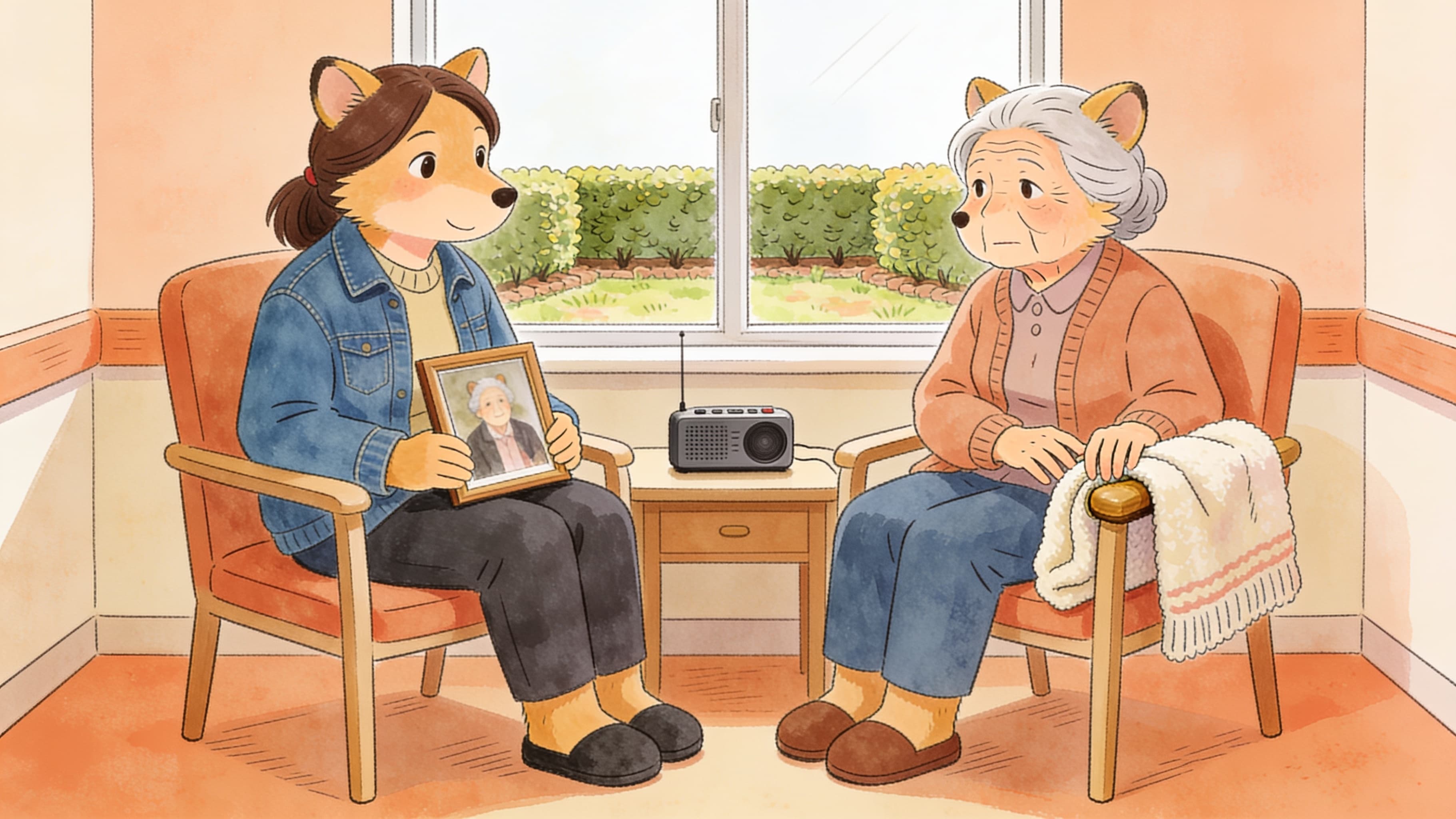
Why This Happens and Why It Hurts So Much
You walked into the room expecting your mother's face to light up the way it always did. Instead, she looked at you blankly, or asked who you were, or called you by someone else's name. The ground shifted under your feet.
If you are living through this, you are not alone, and you are not losing your parent's love. You are watching a disease do what it does to the brain.
Dementia damages the regions responsible for facial recognition and the retrieval of personal memories. As the Alzheimer's Association explains, it is common for people in the middle and later stages of Alzheimer's and other dementias to stop recognizing family members. This is a neurological symptom, not a choice your parent is making.
The grief you feel is real. Researchers call it "ambiguous loss" because the person you love is still physically present, yet the relationship you knew has changed. Feelings of sadness, confusion, anger, and guilt are all normal responses. Give yourself permission to feel every one of them.
Takeaway: Your parent is not rejecting you. The disease is interfering with their ability to place your face and name. That distinction matters.
Before You Blame Progression: Rule Out Treatable Causes
Not every episode of failed recognition means the disease has permanently advanced. Sometimes a temporary medical issue is the real culprit.
Urinary tract infections, dehydration, medication side effects, and even constipation can cause sudden spikes in confusion. A condition called delirium can look a lot like worsening dementia, but it often improves once the underlying problem is treated. Sundowning (increased confusion in the late afternoon or evening) can also make recognition harder at certain times of day.
Watch for these red flags that suggest something acute rather than gradual:
- Confusion that appeared suddenly, within hours or a day or two
- Symptoms that come and go or are much worse at a specific time of day
- Fever, reduced appetite, or signs of pain
- A recent change in medication or dosage
- Unusual drowsiness or agitation that is new
Keep a brief log of when episodes happen, what your parent ate or drank, and whether anything changed in their routine. Bring that log to the next doctor's appointment. A treatable infection or a medication adjustment could bring your parent back to a better baseline.
Takeaway: If the change in recognition was sudden, call the doctor before assuming it is permanent.
What Not to Do: Common Mistakes That Worsen the Moment
When someone you love looks through you like a stranger, instinct screams at you to fix it. But some of the most natural reactions can make things worse.
- Don't correct or argue. Saying "Mom, it's me, your daughter!" with urgency in your voice often triggers agitation. Your parent cannot process the correction, and the emotional charge behind it frightens them.
- Don't quiz them. "Don't you remember?" or "Who am I?" adds pressure and can cause anxiety or shame.
- Don't force recognition. Letting go of the need for them to know your name is one of the hardest things you will ever do, but it frees both of you.
- Don't take it personally. Repeat this to yourself as many times as you need: the disease is causing this, not a loss of love.
Takeaway: Your goal in the moment is connection, not correction.
What to Say: Conversation Starters That Don't Require Recognition
Validation therapy, a widely used approach in dementia care, centers on meeting the person in their reality rather than pulling them into yours. Here are phrases that put it into practice.
- Introduce yourself gently. "Hi, I'm Sarah. I'm here to visit with you today." This frames you as a friendly, safe presence without demanding that they place you.
- Ask about feelings, not facts. "How are you feeling right now?" works far better than "Do you know what day it is?"
- Acknowledge their experience. If they seem confused or anxious, try: "It looks like you're having a tough moment. I'm right here with you."
- Redirect to something pleasant. "I brought something I thought you might enjoy" shifts attention to a positive stimulus.
A Note on Culture and Language
The phrase "Hi, I'm Sarah" may feel wrong in families where elders are always addressed with a title or kinship term. If your parent's culture uses "Amma," "Abuela," "Baba," or another respectful term, adapt your greeting accordingly. You might say, "It's your beti, Priya. I came to sit with you."
Also consider language itself. A parent who spoke English fluently for decades may revert to their first language as dementia progresses. If that happens, try speaking to them in that language, or bring a family member or friend who can. The familiarity of a mother tongue can unlock comfort that English no longer provides.
Takeaway: Match your words to your parent's world, not yours.
What to Bring: Tangible Items That Spark Connection
Even when explicit memory fades, emotional memory and sensory responses often remain intact. The National Institute on Aging notes that music can reach parts of the brain that dementia has not yet affected, sometimes prompting singing, tapping, or a visible shift in mood.
Here are items worth trying:
- Favorite music. A single beloved song can do more than an hour of conversation. A portable speaker or earbuds with a pre-loaded playlist keeps things simple.
- Old photographs. Pictures from young adulthood or early marriage tend to work best because long-term memories are often the last to go. Choose simple shots with one or two people.
- Familiar scents. A sachet of lavender, a dab of the perfume they always wore, or the smell of a favorite lotion can trigger emotional recognition even when names are gone.
- Comfort objects. A soft blanket, a stuffed animal, or a piece of fabric with a familiar texture.
- A favorite treat. A cup of tea they always drank, a piece of butterscotch candy, or a cookie recipe they loved (check with staff about dietary restrictions first).
A Word of Caution
Not every item will be calming. A photograph of a deceased spouse might bring comfort one day and deep distress the next. Introduce items one at a time. Watch your parent's face and body language closely. If you see tension, tears, or agitation, gently remove the item and try something neutral instead, like a soft blanket or quiet music.
Start with sensory items (a scent, a texture) before moving to emotionally charged ones (photos, letters). Think of it as testing the water before stepping in.
The Connection Kit: A Low-Effort Strategy
If you are exhausted and short on time (and most caregivers are), assemble a small bag that stays in your car or by the front door:
- One favorite photo in a sturdy frame
- A small portable speaker or MP3 player pre-loaded with three to five songs
- A scented sachet or travel-size lotion
- A soft cloth or handkerchief
- A printed index card with three go-to phrases ("Hi, I'm [name]. I'm here to visit." / "How are you feeling?" / "I brought something for us to enjoy together.")
Having this ready means you never have to scramble before a visit.
Takeaway: Bring items that engage the senses. Introduce them slowly, and remove anything that causes distress.
How to Respond If They Still Don't Recognize You
You tried the gentle introduction. You played their favorite song. They still don't know who you are. Here is what to do next.
Stay calm and smile. Your facial expression and tone of voice communicate more than your words. A warm, unhurried presence can feel safe even to someone who has no idea who you are.
Accept their reality. If your father thinks you are a nurse, go with it. "Yes, I'm here to check on you" keeps the interaction peaceful. You are not lying; you are meeting him where he is.
Use reminiscence without testing. Share a memory as a story, not a quiz. "I was just thinking about those summer trips to the lake. The water was always so cold." You are offering a feeling, not demanding a fact.
End on warmth. "It was really nice spending time with you today." A gentle touch on the hand (if they are comfortable with touch) can leave a positive emotional imprint that lasts longer than words.
If They Become Agitated or Aggressive
Confusion and fear can sometimes escalate into verbal outbursts or physical aggression. This is frightening, but it is the disease talking, not your parent.
Follow these steps:
- Lower your voice and slow your movements. Speak softly and avoid sudden gestures.
- Maintain a safe distance. Stay an arm's length away. Do not crowd them or block their path.
- Avoid direct eye contact if it seems to escalate things. Turn your body slightly to the side.
- Do not restrain them. If they are standing, let them move. Position yourself near the doorway so you can step out if needed.
- Call for help. In a memory care community, press the call button or find a staff member. At home, call another family member or, if there is any risk of injury, call 911.
- If they calm down, stay nearby but quiet. Sometimes stepping out for two to three minutes and returning with a calm "hello" resets the interaction.
- If they do not calm down, leave the room but monitor from a safe spot. Make sure they cannot access stairs, sharp objects, or an unlocked door.
After an aggressive episode, report it to their medical team. Patterns of aggression may point to pain, a medication issue, or a stage of disease that requires a care plan adjustment.
Takeaway: Safety comes first. De-escalate with softness, distance, and patience, and always involve the care team afterward.
Caring for Yourself After a Difficult Visit
You may drive home in silence, tears running down your face, replaying every moment. That is not weakness. That is love colliding with loss.
Here is how to take care of yourself:
- Name what you are feeling. Grief, anger, guilt, relief that the visit is over. All of it is valid.
- Talk to someone who understands. The Alzheimer's Association 24/7 Helpline at 1-800-272-3900 connects you with trained staff any time of day or night.
- Find a support group. Hearing other families describe the same pain can make you feel less alone. The Eldercare Locator at 1-800-677-1116 can help you find local caregiver resources.
- Practice self-compassion. You are doing your best in a situation that has no perfect answers. If guilt is a constant companion, our guide on Caregiver Guilt: Why It's Normal and How to Let Go of the 'Shoulds' may help.
- Consider professional counseling. A therapist experienced in caregiver grief can give you tools that a well-meaning friend cannot.
Takeaway: You cannot pour from an empty cup. Caring for yourself is not optional; it is part of caring for your parent.
When to Seek Additional Help
Some situations call for more than coping strategies.
- Frequent aggression or severe distress that does not respond to de-escalation should be evaluated by a physician. Medication adjustments or behavioral interventions may help.
- Safety concerns at home, such as wandering, refusing to eat, or leaving the stove on, may mean it is time to explore memory care communities.
- Caregiver burnout is real. Adult day programs and respite care services can give you time to rest while your parent receives supervised, engaging care.
- Financial worries should not keep you from exploring options. Our guide on How to Pay for Memory Care When You Have No Savings walks through Medicaid, veterans' benefits, and other resources.
The Love Remains
Your parent may not say your name. They may not know the word "daughter" or "son." But when you sit beside them and hold their hand, when you hum a song they once sang to you, something in them may soften. A smile. A squeeze of the fingers. A moment of calm where there was none before.
Those moments are not nothing. They are everything.
Millions of families are walking this same road. You do not have to walk it alone, and the fact that you are here, reading this, looking for better ways to show up, says more about your love than any name ever could.
Sources & further reading
- What Is Dementia? · Alzheimer's Association
- 24/7 Helpline · Alzheimer's Association
- Eldercare Locator · Administration for Community Living
Related Articles
When Home Care Isn’t Enough: 7 Signs It’s Time for Assisted Living or Memory Care
A practical checklist of 7 signs that home care is no longer safe or sustainable, guiding families toward assisted living or memory care.
Memory Care in Oregon: Licensing, Costs, and What Families Should Look For in 2026
Oregon's memory care costs and regulations explained. How to verify dementia training, compare communities, and budget for 2026.
Private Pay vs. Government Assistance: How Senior Care Actually Gets Paid For
Home care, assisted living, and nursing homes are funded very differently. A plain-language map of private pay versus Medicare, Medicaid, and VA support, setting by setting.