Downsizing for Assisted Living: A Room-by-Room Checklist for Families
Introduction
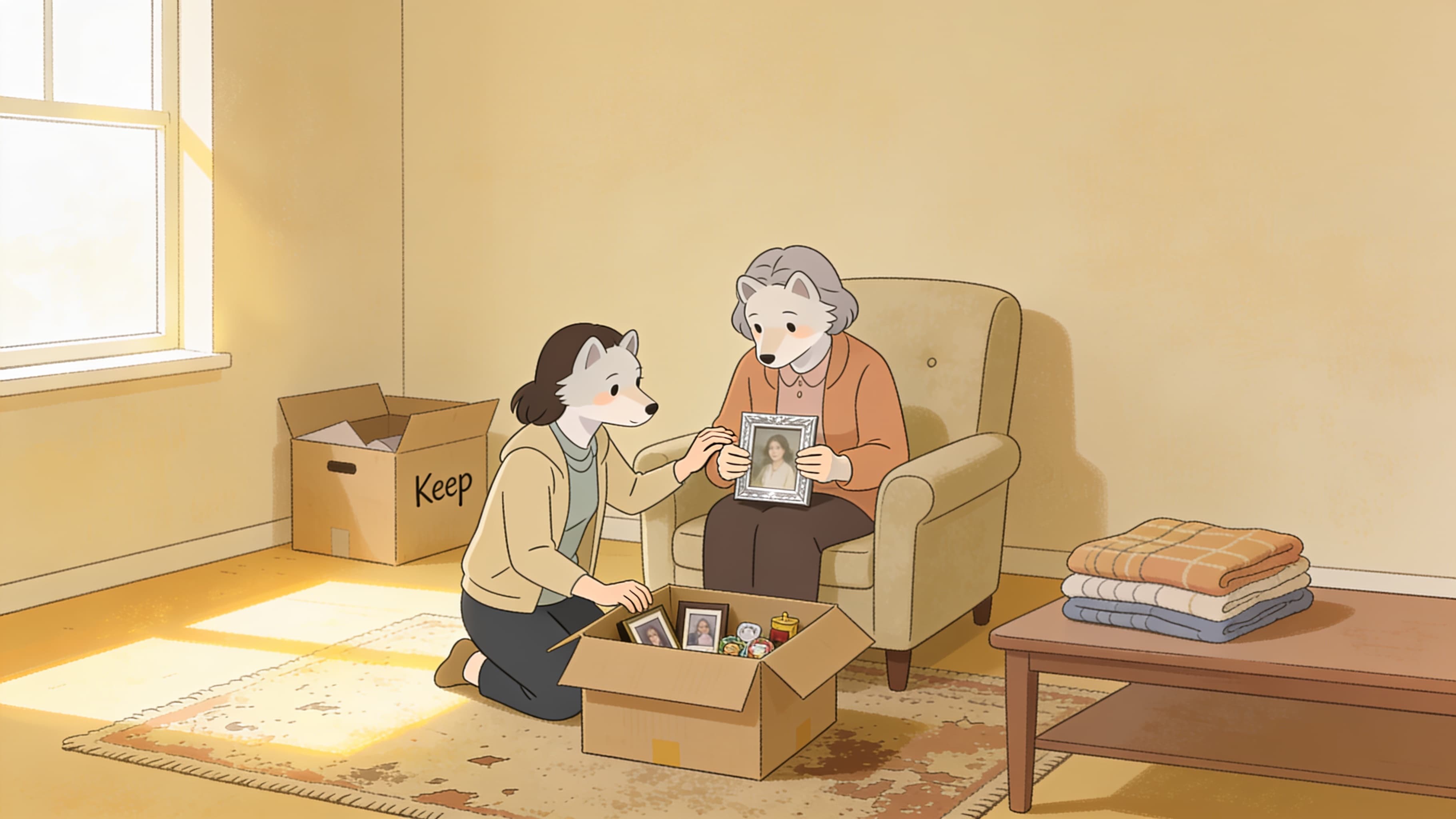
Moving a parent into assisted living is rarely just a logistics puzzle, it's an emotional transition. The house they've lived in for decades holds decades of memories. Every room holds tangible history. But the space in a new apartment is a fraction of that. The question is not "what to keep?" but "what to keep in this new chapter?"
This room-by-room checklist helps you and your family make decisions with a clear framework: Keep, Sell, Donate, Discard. It's designed to reduce decision fatigue and keep the focus on what matters most, your parent's comfort and safety in their new home.
If your parent is reluctant to part with possessions, you're not alone. Many families face this pushback. Our guide on When a Parent Refuses Help: How to Have the Talk About Senior Care offers strategies for that conversation.
Living Room
This is often the hardest room because it's where family gathered. The goal is to keep a few anchor pieces that feel familiar.
Keep
- One or two comfortable chairs, choose the ones with good lumbar support. If your parent has mobility issues, consider a lift chair. (Learn more about safe exercise at any age with Strong at Any Age.)
- A small side table for a lamp, TV remote, and phone.
- A few framed photos, not the entire gallery wall, but the ones that spark joy.
- A favorite throw blanket or pillow, small comforts travel well.
Sell or Donate
- Large sectional sofas, bulky entertainment centers, and heavy wood coffee tables. Measure the new apartment's living area before deciding.
- Extra lamps, decorative items, and stacks of magazines.
Discard
- Worn-out upholstery, stained carpets, broken electronics.
Decision point: If the piece won't fit through the apartment door comfortably, it's a candidate for sale or donation.
Dining Room
Most assisted living communities have a communal dining room, so a full dining set is rarely needed. But a small table for meals in the apartment can be a nice touch.
Keep
- A small round or square table that seats two to four.
- Two sturdy chairs (or one if space is tight).
- A set of everyday dishes, glasses, and flatware, enough for a small meal.
Sell or Donate
- The formal china, crystal, and silverware if they're rarely used. Consider passing them to family members who would appreciate them.
- A large dining table and full set of chairs.
Discard
- Chipped plates, broken stemware, old placemats.
Kitchen
Assisted living apartments usually have a kitchenette, a small refrigerator, microwave, and maybe a two-burner cooktop. You don't need a full kitchen's worth of gadgets.
Keep
- Basic cookware: one small pot, one skillet, a baking sheet.
- Essential utensils: spatula, wooden spoon, can opener, vegetable peeler, knife, cutting board.
- A few mugs, glasses, and plates.
- A coffee maker or electric kettle if they're a coffee/tea drinker.
Sell or Donate
- Large stand mixers, food processors, slow cookers, and specialty appliances unless they're used weekly.
- Extra sets of pots and pans, mismatched lids.
- Bulk pantry items and spices that will expire before they're used.
Discard
- Worn non-stick pans, rusted tools, expired food.
Decision point: If the appliance has more than one function and is used less than once a month, it's likely a candidate for donation.
Bedroom
This room should be a sanctuary. The bed is the most important piece of furniture.
Keep
- The bed, if it's comfortable and fits the new room. Most assisted living beds are twin or full. Measure the space.
- A nightstand with a lamp and a place for glasses, water, phone.
- A small dresser or chest of drawers.
- Bedding: two sets of sheets, a blanket, pillows.
- A clock and a small trash can.
Sell or Donate
- Large headboards, footboards, and heavy armoires.
- Extra mattresses, bed frames, and linens.
Discard
- Worn-out pillows, stained mattress pads, broken bed slats.
Bathroom
Bathrooms in assisted living are designed for safety, but you'll still need to stock the essentials.
Keep
- Grab bars and shower chair, the community may provide these, but if not, bring them.
- Non-slip bath mats.
- Toiletries: soap, shampoo, toothpaste, lotion, but only what they'll use in a month.
- A small medicine cabinet organizer (if not already built in).
- A towel set: two bath towels, two hand towels, two washcloths.
Sell or Donate
- Bulk bath products, old towels, decorative soap dispensers.
Discard
- Expired medications (dispose properly per pharmacy or community guidelines), old razors, moldy shower curtains.
Closet
Closet space is precious. This is a good opportunity to pare down the wardrobe.
Keep
- Seasonal clothing, focus on the current season. If moving in summer, pack only summer clothes. You can swap later.
- Comfortable shoes, slip-ons are best for safety.
- One or two outfits for special occasions.
- Underwear, socks, and pajamas, enough for two weeks.
Sell or Donate
- Clothing that hasn't been worn in a year, is too big or too small, or has stains or tears.
- Formal wear likely never worn.
- Extra shoes, belts, purses, scarves, hats.
Discard
- Worn-out underwear, socks with holes, broken shoes.
Decision point: If they haven't worn it in the last 12 months, donate it unless it has strong sentimental value.
Office / Study
If your parent had a home office, the new apartment likely won't have space for a desk and filing cabinet.
Keep
- A small desk or writing surface (maybe a lap desk).
- A tablet or laptop if they use it for email, photos, or video calls.
- Important documents, birth certificate, marriage license, will, power of attorney, tax returns. Shred or scan the rest.
- A few books, a small shelf or stack.
Sell or Donate
- Large desks, bookshelves, filing cabinets.
- The majority of books, consider donating to a library or school.
- Old electronics (printers, monitors, scanners) that won't be used.
Discard
- Junk mail, expired coupons, old newspaper clippings, broken electronics.
Garage / Basement / Attic
These spaces are often filled with decades of accumulation. Tackle them last, they're the most emotionally draining.
Keep
- Seasonal decorations, one small box of holiday items.
- Tools, a basic set (hammer, screwdriver, wrench) if they like to do small repairs.
- Sentimental items, a few keepsakes (photo albums, a child's drawing, a special memento). Limit to one box.
Sell or Donate
- Tools, lawn equipment, holiday decorations, sports equipment, craft supplies.
- Furniture stored in the attic.
Discard
- Paint cans, chemicals, old car parts, broken furniture, anything rotted or rusted.
Final Framework: The Four Categories
When you're standing in a room overwhelmed by stuff, use this simple decision tree:
- Keep, If it's used daily, fits the new space, and brings comfort or function.
- Sell, If it has monetary value and you have time to list it (use Facebook Marketplace, consignment shops, or a senior move manager).
- Donate, If it's in good condition but not needed. Organizations like Goodwill, Salvation Army, or local senior centers often accept furniture.
- Discard, If it's broken, worn out, or expired.
Consider involving a professional senior move manager. The National Association of Senior Move Managers (NASMM) can be a resource for families who want hands-on help. (External resources: NIA's guide on moving to assisted living and AARP's downsizing tips.)
Keep in mind that this is a marathon, not a sprint. Start early, take breaks, and focus on the goal: creating a safe, comfortable home that supports your parent's well-being in their new community.
Sources & further reading
Related Articles
When Home Care Isn’t Enough: 7 Signs It’s Time for Assisted Living or Memory Care
A practical checklist of 7 signs that home care is no longer safe or sustainable, guiding families toward assisted living or memory care.
Memory Care in Oregon: Licensing, Costs, and What Families Should Look For in 2026
Oregon's memory care costs and regulations explained. How to verify dementia training, compare communities, and budget for 2026.
Private Pay vs. Government Assistance: How Senior Care Actually Gets Paid For
Home care, assisted living, and nursing homes are funded very differently. A plain-language map of private pay versus Medicare, Medicaid, and VA support, setting by setting.