Summer Heat Safety for Seniors: How Assisted Living and Home Care Providers Can Help
The Phone Call Nobody Wants
Imagine a daughter checking her weather app from three states away and seeing 104°F next to her mother's zip code. Her mother is 82, lives alone, and takes a diuretic for high blood pressure. The window unit in the bedroom rattles but mostly works. The one in the living room gave out last July. The daughter calls, and her mother says she's fine, just a little tired. "I had some iced tea this morning."
That conversation, or some version of it, plays out in thousands of families every August. The worry is not abstract. According to the CDC, adults aged 65 and older account for a disproportionate share of heat-related emergency department visits and deaths each year, with risk climbing sharply during prolonged heat waves. Whether your loved one lives in an assisted living community or receives care at home, the steps you take before and during extreme heat can be the difference between a safe summer and a medical crisis.
Why Extreme Heat Is Dangerous for Older Adults
Aging changes the body's ability to cool itself. Older adults sweat less, and blood flow to the skin decreases, making it harder to release internal heat. The National Institute on Aging notes that these changes mean a senior's core temperature can rise faster than a younger person's, even in the same environment.
Medications add another layer of risk. Diuretics increase fluid loss. Beta-blockers reduce the heart's ability to respond to heat stress. Anticholinergics, found in many allergy and bladder medications, suppress sweating. The CDC's guidance on extreme heat and older adults highlights that these drug interactions are a leading contributor to heat illness in seniors.
Then there is the thirst problem. As we age, the brain's thirst signal weakens. An older adult may genuinely not feel thirsty, even when significantly dehydrated. Combine that diminished signal with chronic conditions like heart disease, diabetes, or dementia (which can mask or mimic heat symptoms), and you have a population that is uniquely vulnerable every time the thermometer climbs.
How Assisted Living Facilities Should Prepare for Heat Waves
If your loved one lives in an assisted living community, you have the right to ask specific questions about heat preparedness. Here is what to look for.
Cooling and HVAC
Every resident room and common area should have reliable air conditioning. Ask the facility whether HVAC systems are inspected and maintained before summer, and whether maintenance logs are available. Under CMS emergency preparedness requirements, facilities must have plans for maintaining safe temperatures during extreme weather.
But not every building has central air. Some older facilities rely on window units or portable coolers. If that is your loved one's situation, ask where the designated cooling areas are and how staff ensure residents spend time there during peak heat hours.
Hydration Rounds
During extreme heat events, staff should be offering fluids every one to two hours, not waiting for residents to ask. Ask the facility director how hydration is tracked and whether there is a protocol for residents who refuse drinks.
A critical caveat: if your loved one has heart failure, kidney disease, or another condition that requires fluid restriction, extra water can actually be dangerous. Always confirm the prescribed daily fluid limit with the doctor, and make sure the facility's care plan reflects it. A good hydration log includes not just what was consumed but also the maximum allowed intake for that resident.
Activity Adjustments and Staff Training
Outdoor activities should be rescheduled to early morning or evening, avoiding the 10 a.m. to 4 p.m. window when heat peaks. Indoor exercise alternatives (chair yoga, walking laps in air-conditioned hallways) should be available. All staff should be trained on the signs of heat exhaustion and heat stroke, with refresher sessions before summer begins.
How Home Care Providers Can Support Heat Safety
For seniors aging in place, the home itself becomes the front line. Whether you are a family caregiver or a home care aide, a few concrete steps go a long way.
The Home Cooling Checklist
Before the worst heat arrives, walk through the home. Does the AC work? Are filters clean? If there is no air conditioning, or if only one room is cooled, identify the coolest room in the house (often a ground-floor room with north-facing windows) and set it up as a daytime retreat with a comfortable chair, water, and a phone.
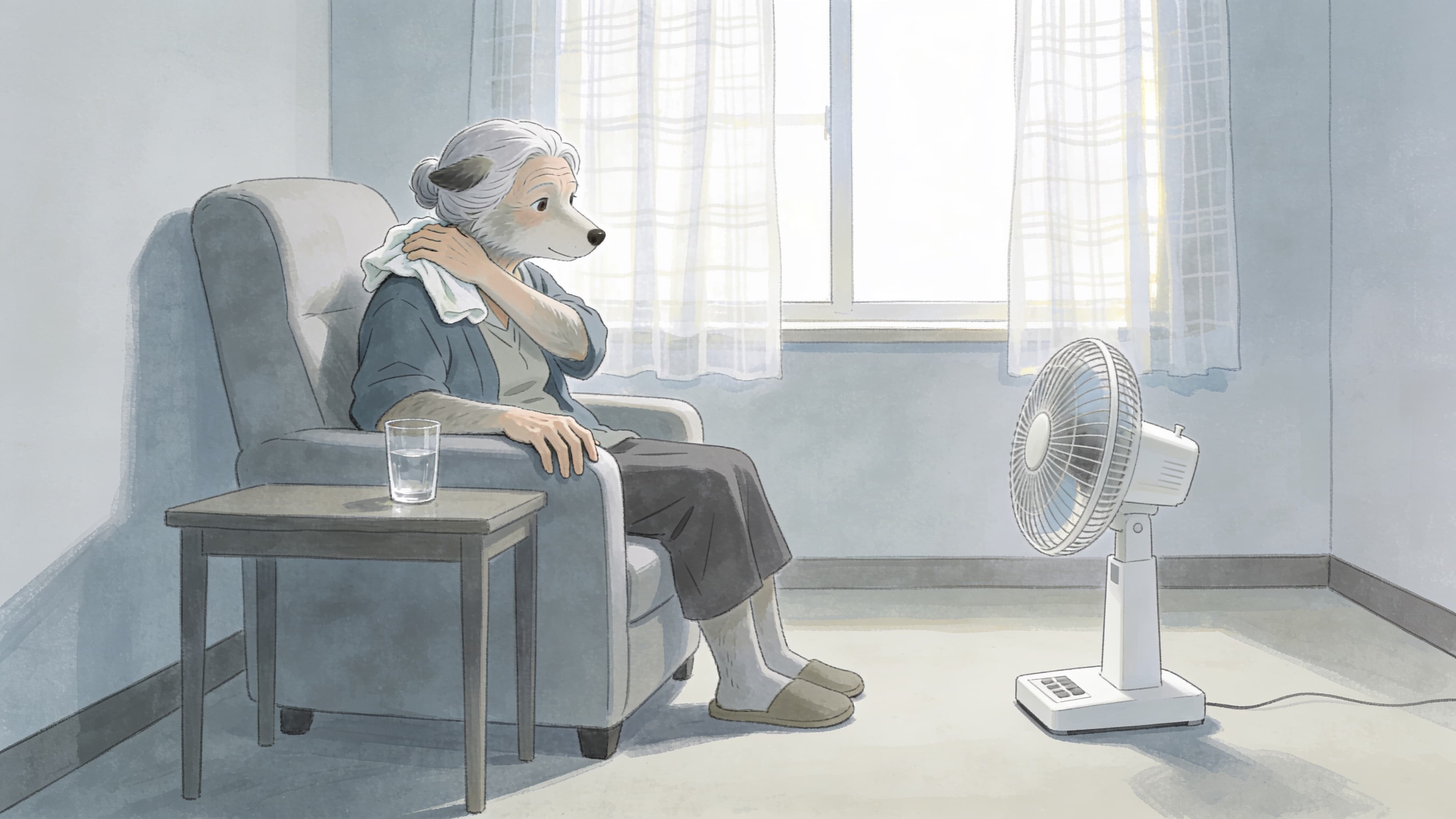
Close blinds and curtains during peak sun. Use window fans to pull cooler air in at night and push hot air out during the day. And for low-cost relief that requires no electricity at all: cool damp cloths on the neck and wrists, a shallow foot bath with cool water, and a simple spray bottle filled with water for periodic misting. These strategies matter especially when AC is unavailable or unaffordable.
Hydration That Accounts for Medical Needs
Aim for six to eight glasses of water per day as a general guideline, but check with the doctor first if your loved one has any fluid restrictions. A simple hydration log on the refrigerator door can help. Include columns for time, type of fluid, amount, and (if applicable) the prescribed daily maximum. Phone alarms set every two hours can serve as reminders for both the caregiver and the senior.
Fluids do not have to be plain water. Chilled fruit, popsicles, cucumber slices, and broth all contribute to intake. Avoid alcohol and excessive caffeine, which increase fluid loss.
Clothing and Comfort
Dress your loved one in lightweight, light-colored, loose-fitting clothing. Encourage cool showers or sponge baths during the hottest part of the day. A damp towel draped over the shoulders can lower perceived temperature quickly.
Here is a conversation script you might try: "Mom, it's really hot out today. Let's sit near the fan, and I'll get us both a glass of water. We can go out again this evening when it cools off." Simple, warm, and without a lecture.
Protecting Medications from the Heat
This is one families often overlook. Many common medications lose potency when stored above 86°F, including some statins, anti-epileptics, and blood pressure drugs. Insulin and certain thyroid medications require refrigeration and can degrade quickly in a warm room.
During a heat wave, check each medication's storage temperature on the label. If the home's interior temperature rises above 85°F, keep pills in a sealed container inside the refrigerator (but never freeze them). For refrigerated medications, make sure any backup power plan keeps the fridge running. If a medication looks discolored, has an unusual smell, or has been exposed to excessive heat, call the pharmacist before using it.
Creating a Heat Emergency Plan
Every family should have a written plan, whether their loved one is in a facility or at home.
Identify Cool Locations
Know where your loved one can go if cooling fails at home. Public cooling centers are often set up during heat emergencies. The Eldercare Locator (1-800-677-1116) can help you find nearby cooling centers and local support services.
Update Emergency Contacts
Your contact list should include the facility nurse or home care agency supervisor, the primary care physician, a backup family member, and local emergency services. Post this list on the refrigerator and save it in your phone.
Plan for Power Outages
If your loved one depends on medical devices like oxygen concentrators or CPAP machines, battery backups or a portable generator are essential. Ready.gov offers guidance on emergency preparedness for older adults, including power backup planning. Store backup batteries in a cool place and test them monthly.
Medication Storage
Keep all medications in a cool, dry area away from direct sunlight. During extended outages, a small cooler with ice packs can maintain safe temperatures for refrigerated drugs for several hours.
Recognizing and Responding to Heat-Related Illness
Heat illness in older adults does not always look like the textbook description. That is what makes it dangerous.
Heat Exhaustion
Classic signs include heavy sweating, pale or clammy skin, nausea, dizziness, and a weak pulse. Move the person to a cool area, offer small sips of water (if they can drink safely), and apply cool cloths.
Heat Stroke
Heat stroke is a medical emergency. Symptoms include hot, red skin (which may or may not be dry), confusion, slurred speech, loss of consciousness, and a body temperature at or above 103°F. Call 911 immediately.
The Red Flags That Are Easy to Miss
In older adults, heat illness can show up as nothing more than sudden confusion, unusual weakness, or a temperature above 101°F. There may be no dramatic "hot, dry skin" presentation. Dementia can make it even harder to detect because the person may not be able to describe how they feel.
When in doubt, get medical help. Here is a simple decision path:
- Is the person confused, disoriented, or slurring words? Call 911.
- Is the person unable to drink fluids? Call 911.
- Is their temperature above 101°F and not coming down with cooling measures? Call 911.
- If none of the above but the person seems "off" (unusually fatigued, not eating, unsteady), call the doctor or nurse line immediately.
While waiting for help, move the person to shade or a cool room, remove excess clothing, and apply cool wet cloths or ice packs to the armpits and groin.
Do not give fluids to someone who is confused or unconscious. This risks choking.
Resources and Financial Assistance for Heat Safety Equipment
Air conditioning saves lives, but it is not free. Here are programs that can help.
LIHEAP (Low Income Home Energy Assistance Program) helps eligible households pay cooling bills and may provide fans or window AC units. Apply through your state energy office. Be aware that LIHEAP funds are often exhausted by midsummer. If you apply and funding is gone, call your local Area Agency on Aging, which may run emergency fan distribution programs or know of community organizations that do.
Medicare does not cover air conditioning equipment, but it may cover home health services that include monitoring for heat-related risks during visits.
For veterans, the VA Aid and Attendance benefit may cover home modifications, including window AC units or improved insulation. Check VA.gov for eligibility details.
The Eldercare Locator (1-800-677-1116) remains the best single starting point for finding local cooling centers, energy assistance, and emergency services in your area.
Extreme heat is not just uncomfortable for older adults. It is medically dangerous in ways that can escalate within hours. The most protective thing a family can do is plan before the heat arrives, ask direct questions of any facility or agency involved in care, and trust your instincts when something seems wrong. A phone call to 911 that turns out to be unnecessary is always better than one that comes too late.
This article provides general health and safety information and is not a substitute for medical advice. Always consult your loved one's physician regarding specific health conditions, medications, and fluid intake guidelines.
Sources & further reading
- Hot Weather Safety for Older Adults · National Institute on Aging
- Eldercare Locator · Administration for Community Living
- Older Adults: Ready.gov · FEMA / Ready.gov
- Aid and Attendance Benefits and Housebound Allowance · U.S. Department of Veterans Affairs
Related Articles
When Home Care Isn’t Enough: 7 Signs It’s Time for Assisted Living or Memory Care
A practical checklist of 7 signs that home care is no longer safe or sustainable, guiding families toward assisted living or memory care.
Memory Care in Oregon: Licensing, Costs, and What Families Should Look For in 2026
Oregon's memory care costs and regulations explained. How to verify dementia training, compare communities, and budget for 2026.
Private Pay vs. Government Assistance: How Senior Care Actually Gets Paid For
Home care, assisted living, and nursing homes are funded very differently. A plain-language map of private pay versus Medicare, Medicaid, and VA support, setting by setting.