Memory Care Activities That Actually Work: A Family Guide to Meaningful Engagement
Why Meaningful Activities Matter for Dementia Care
When a family member has dementia, one of the first anxieties that surfaces is deceptively simple: What will they do all day? It is a fair question, and the answer matters more than most people realize.
The Alzheimer's Association emphasizes that meaningful activities promote dignity, confidence, and social connection for people living with dementia. Structured routines also reduce sundowning and agitation, two of the most distressing behavioral symptoms in mid-to-late stages. The National Institute on Aging (NIA) reports that even in advanced dementia, sensory experiences like listening to familiar music can trigger positive emotional responses.
But here is the part that often gets left out: poorly matched or forced activities can make things worse, not better. If a person with moderate dementia is pushed into a group trivia game they can no longer follow, the result is not stimulation. It is frustration, withdrawal, or agitation. Watch for pacing, shouting, clenched fists, or attempts to leave the room. Those are signals that the activity is causing distress, not relieving it. The goal is engagement, not compliance.
Matching Activities to Dementia Stage: Early, Middle, and Late
Dementia is not one condition at one speed. The right activity at the wrong stage is the wrong activity.
Early Stage
People in early-stage dementia often retain complex skills. Card games, gardening, cooking familiar recipes, even volunteer work can maintain social interaction and a sense of competence. The key is supporting independence without setting up failure.
Middle Stage
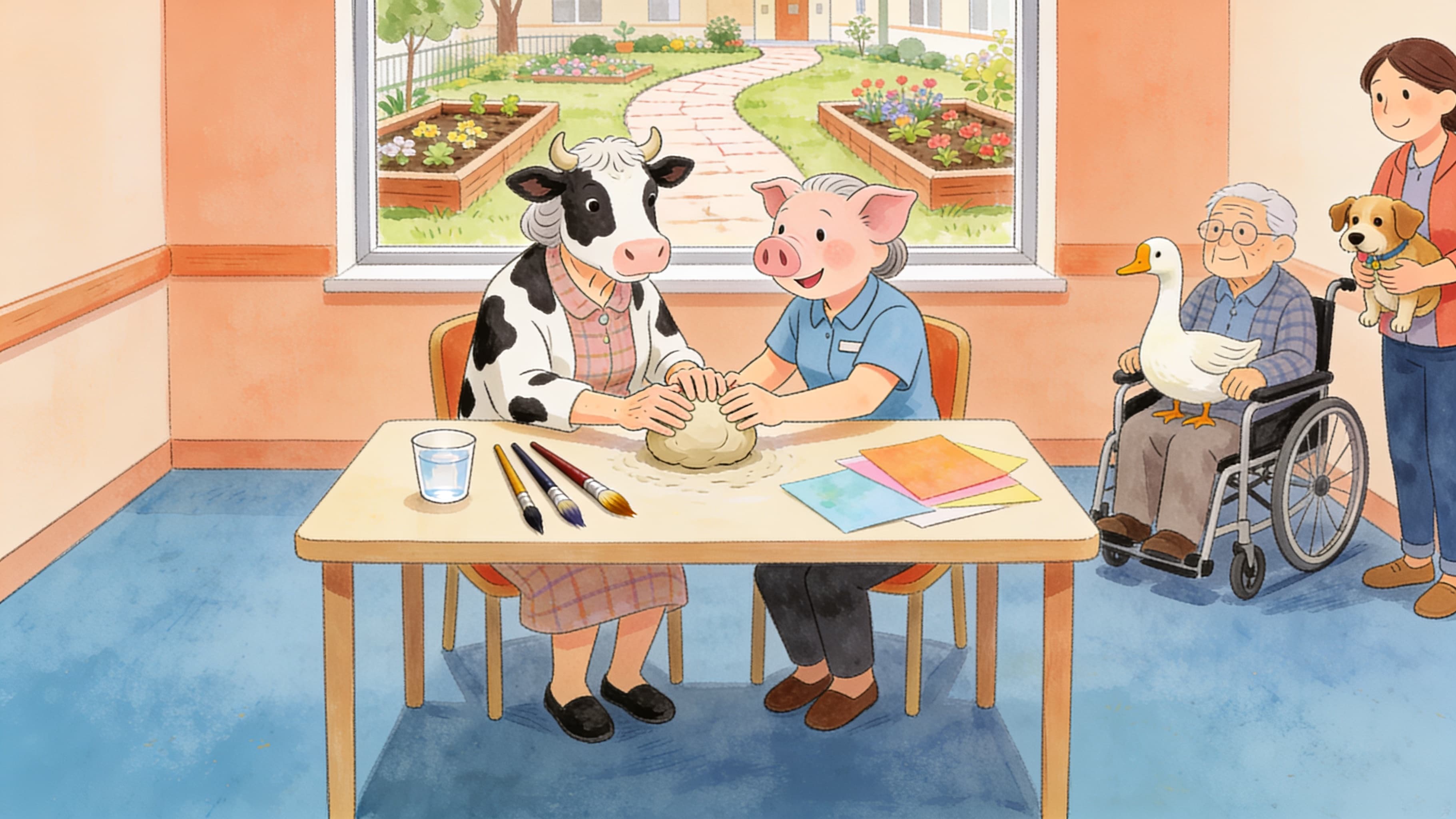
As cognition declines, simplify. Folding towels, sorting buttons by color, watering plants, or simple art projects all work. Focus on the process, not the outcome. Nobody needs to produce a finished painting. Holding a brush and moving color across paper is the point.
Late Stage
Sensory stimulation becomes central. Hand massage with lotion, listening to songs from the person's young adulthood, looking at family photo albums, or feeling textured fabrics can all spark brief but genuine moments of connection. Even a few minutes of positive engagement counts.
The NIA recommends tailoring activities to the person's current abilities and interests, not their past capabilities. A retired accountant may no longer enjoy puzzles with numbers. A former gardener may still light up at the smell of fresh soil.
Evidence-Based Activity Categories That Work
Not every activity marketed as "therapeutic" has strong evidence behind it. Here is what the research actually supports, and where the evidence is thinner.
Music Therapy
This is one of the most studied interventions. A 2024 meta-analysis published in JAMA Neurology found that individualized music therapy significantly reduced agitation in people with late-stage dementia compared to standard care. Personalized playlists drawn from the person's teens and twenties tend to be most effective, because music memory is stored in brain regions that dementia damages last.
Art and Creative Expression
Painting, coloring, and working with clay provide non-verbal outlets for emotion. The evidence here is promising but more limited than for music. Studies tend to be small. Still, the Alzheimer's Association includes art activities in its caregiver resources, and the low risk makes this a reasonable option at any stage.
Reminiscence Therapy
Using photos, familiar objects, or recorded family stories to spark conversation has shown modest improvements in mood and short-term cognition in several studies. It works best in early and middle stages when the person can still participate verbally.
Animal-Assisted Therapy
Visits from trained therapy animals can reduce stress hormones and increase social engagement. The evidence is moderate, and practical considerations matter: some residents fear dogs, and allergies are common in group settings.
Physical Activity
Gentle walks, chair exercises, and dancing improve mobility, sleep quality, and mood. The CDC recommends 150 minutes of moderate physical activity per week for older adults, adapted as needed for cognitive and physical limitations.
A Note on Aromatherapy
Lavender diffusers and scented lotions are popular in memory care settings. The evidence for aromatherapy reducing agitation is weak and inconsistent. It is unlikely to cause harm, but families should not expect it to replace more substantiated approaches.
Safety Guidelines for Dementia-Friendly Activities
Safety is not optional, and it requires more than common sense.
- Environment: Remove tripping hazards. Use non-slip mats. Ensure bright, even lighting with minimal glare.
- Supervision ratios: For late-stage dementia, one-on-one supervision during activities is critical. In group settings, at least one staff member per eight residents is a minimum, not a gold standard.
- Choking hazards: Use large pieces for crafts. Avoid beads, buttons, or small objects that could be swallowed. This applies even to residents who have never put objects in their mouths before.
- Fatigue and frustration: Stop if the person becomes agitated. Redirection is always better than persistence.
- Adaptive tools: Large-handled paintbrushes, easy-grip utensils, and weighted silverware can make the difference between participation and exclusion.
Adapting for Physical and Sensory Limitations
This is a gap many families and even some communities overlook. Hearing loss, vision impairment, and mobility limitations are extremely common in older adults with dementia, and they directly affect activity participation.
- Hearing: Test hearing aids before every activity session. Untreated hearing loss can mimic cognitive decline and dramatically reduce engagement. If your loved one seems to "tune out" during group music, the problem may be their ears, not their brain.
- Vision: Use large-print labels, high-contrast materials, and good task lighting. Avoid activities that depend on fine visual detail unless the person can see well enough to participate.
- Mobility: Offer seated options for every physical activity. A "walking group" that excludes wheelchair users is not inclusive programming.
Costs and Resources for Activities at Home and in a Community
Activity costs range from nothing to significant, depending on what you choose.
| Category | Typical Monthly Cost | Notes |
|---|---|---|
| Free options (walks, music, photos) | $0 | Use streaming radio, family albums, nature |
| Basic supplies (art, puzzles, gardening) | $15 to $50 | Dollar stores and thrift shops work well |
| Professional music or art therapy | $50 to $150 per session | Frequency varies; weekly is common |
| Memory care community activities | Included in monthly fee | Ask whether specialized therapy sessions cost extra |
A few important financial notes. Medicare Part B may cover occupational therapy assessments that include activity recommendations, particularly when ordered by a physician as part of a care plan. However, Medicare does not cover recreational therapy as a standalone service. Some Medicare Advantage plans offer supplemental benefits for therapeutic activities, so check your specific plan documents. Medicaid coverage varies by state. Community fees also vary significantly by region. For Texas-specific pricing, see our Senior Care Costs in Texas: 2026 Price Guide.
How to Evaluate a Memory Care Community's Activity Program
A glossy brochure with photos of smiling residents painting is marketing. Here is how to look past it.
Questions to Ask on a Tour
- "What is your staff-to-resident ratio during group activities?" One staff member per eight residents is a baseline. If they cannot give you a number, that is a red flag.
- "What credentials does your activity director hold?" Look for NCCAP (National Certification Council for Activity Professionals) or CDP (Certified Dementia Practitioner) credentials.
- "May I see a sample weekly schedule?" A strong program offers variety: music, art, exercise, and outdoor time at least twice daily. If the schedule is mostly "movie time" and "bingo," the programming is thin.
- "Can families join activities or observe?" Programs that welcome family involvement tend to be more accountable.
- "What is the annual turnover rate of your activity staff?" High turnover means residents constantly lose the people who know their preferences. If the director hesitates or cannot answer, press the point.
- "May I observe a scheduled activity session, without advance notice?" A community that says yes is confident in what it delivers. One that insists on scheduling your visit may be staging what you see.
Check the Public Record
State inspection reports sometimes cite communities for inadequate activity programming. Look for deficiencies related to "activities" or "quality of life" in your state's nursing home or assisted living inspection database. Our guide on How to Choose a Nursing Home for a Parent with Dementia walks through how to read these reports.
Creating a Personalized Activity Plan for Your Loved One
Whether your family member lives at home or in a community, a personalized plan makes a difference.
- Start with observation. Spend a few days watching what your loved one gravitates toward now. Not what they used to enjoy, but what holds their attention today.
- Try one new activity per week. Note their reaction: smiles, verbal responses, body language. Keep a simple written log.
- Build a basic daily rhythm. For example: morning walk, mid-morning music, afternoon art or sensory activity, evening relaxation with a familiar TV show or audiobook.
- Share the plan with the care team. Whether that is a home aide or a community's activity director, everyone involved should know what works and what does not.
- Set realistic expectations. Fifteen minutes of genuine, positive engagement is a success. Do not measure by the clock.
The NIA recommends keeping an ongoing record of which activities produce positive responses and which ones fall flat. Over time, patterns emerge.
When Activities Do Not Go as Planned
Resistance and agitation are not failures. They are information.
- Redirect calmly. If your loved one refuses an activity, do not argue or explain. Move to something else. "Let's try this instead" works better than "But you used to love this."
- Simplify the task. If painting is too much, try just holding the brush. If sorting is overwhelming, reduce the pile to three items.
- Respect their "no." Forcing participation increases agitation. Try again later, or try something different tomorrow.
- Use gentle scripts. "Let's just listen to one song" or "We can stop anytime" lowers the stakes. Our guide on How to Set Boundaries When a Parent Resists Senior Care offers more language for these moments.
- Watch for patterns. If agitation always peaks in late afternoon, schedule stimulating activities for the morning. If a certain type of music triggers distress, remove it from the playlist regardless of how much they "used to love it."
The hardest truth for families is that what works today may not work next month. Dementia changes the landscape continuously. The best activity plan is one you are willing to revise.
This article provides general information about dementia care activities and is not a substitute for professional medical advice. Consult your loved one's physician or care team before starting new therapies.
Sources & further reading
- Activities for People with Dementia · Alzheimer's Association
- Physical Activity Guidelines for Older Adults · Centers for Disease Control and Prevention
Related Articles
When Home Care Isn’t Enough: 7 Signs It’s Time for Assisted Living or Memory Care
A practical checklist of 7 signs that home care is no longer safe or sustainable, guiding families toward assisted living or memory care.
Memory Care in Oregon: Licensing, Costs, and What Families Should Look For in 2026
Oregon's memory care costs and regulations explained. How to verify dementia training, compare communities, and budget for 2026.
Private Pay vs. Government Assistance: How Senior Care Actually Gets Paid For
Home care, assisted living, and nursing homes are funded very differently. A plain-language map of private pay versus Medicare, Medicaid, and VA support, setting by setting.