Hurricane Preparedness for Seniors in Florida: A Family Checklist
Why Florida Families Need a Plan Now
August is peak hurricane season, and for families with aging parents in Florida, the stakes are especially high. Seniors are more vulnerable to storm-related disruptions, power outages, evacuation stress, medication gaps, and often need extra lead time to prepare. If you’re coordinating from another state, a clear checklist can be the difference between chaos and calm.
Step 1: Build an Evacuation Plan Together
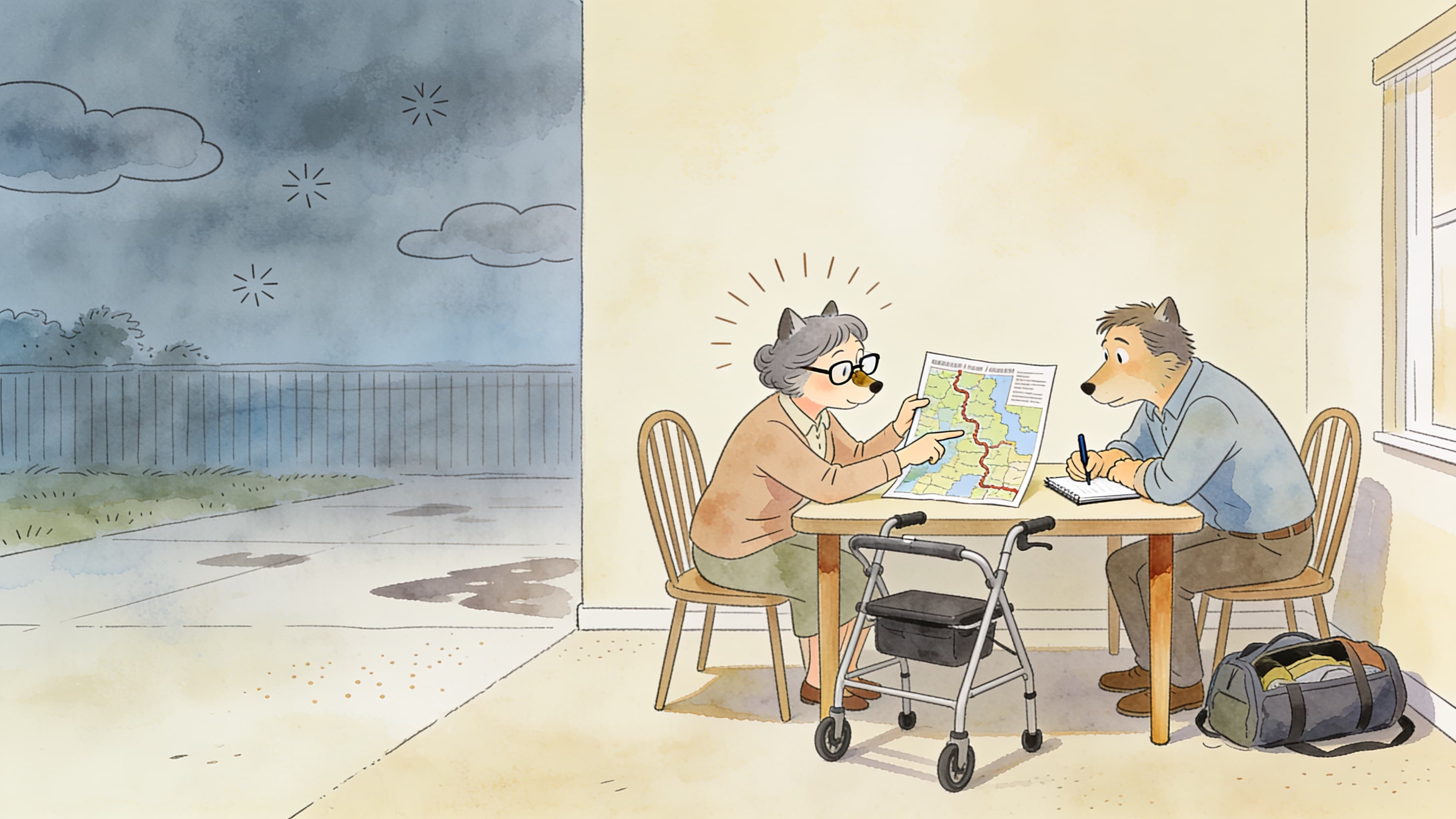
Start by knowing your parent’s evacuation zone. Florida’s Division of Emergency Management provides interactive maps by county, check for their specific zone (A, B, C, etc.) and the nearest shelter. Many counties operate special-needs shelters for seniors who require medical monitoring; registration is required in advance.
Know the Routes and Backup Routes
Identify two evacuation routes from their home and a meeting point outside the projected storm path. For seniors in coastal cities like Miami, Tampa, or Jacksonville, inland destinations, Gainesville, Ocala, or Tallahassee, are common fallbacks. Practice the drive if possible.
Plan for Pets and Mobility Aids
If your parent uses a walker, wheelchair, or oxygen concentrator, ensure the evacuation vehicle can accommodate it. Florida law requires hotels and shelters to accept service animals, but it’s wise to call ahead.
Step 2: Secure Medications and Medical Supplies
A seven-day supply of all prescriptions is the minimum, two weeks is better. The CDC’s hurricane preparedness page recommends keeping medications in their original bottles and packing a list of dosages, prescribing doctors, and pharmacy phone numbers.
Refill Early
Many pharmacies allow early refills during a storm watch. Call the pharmacy or check Florida’s emergency prescription refill authorization (available during declared emergencies) to avoid gaps.
Don’t Forget Over-the-Counter Essentials
Pain relievers, antacids, bandages, and any medical supplies (catheters, diabetes test strips, oxygen tubing) should be packed in a waterproof bag.
Step 3: Gather Medical Records and Contacts
A go-bag with key documents is critical, especially if your parent needs to visit an unfamiliar hospital or shelter. The National Institute on Aging suggests photocopies of:
- Medicare/Medicaid card and insurance ID
- List of current diagnoses and allergies
- Advanced directives, living will, and power of attorney
- Emergency contact list (including you, their primary care doctor, and a local friend or neighbor)
Digital Backup
Scan these documents and store them in a secure cloud folder (Google Drive, Dropbox) that you and a trusted sibling can access from anywhere.
Step 4: Establish a Communication Plan
Cell towers often fail during hurricanes. Have a backup plan:
- Designate an out-of-state contact (someone outside the storm zone) as a central relay point.
- Program emergency numbers into your parent’s phone, including yours, local police, and Florida’s 211 helpline for disaster resources.
- If your parent has memory or cognitive challenges, consider a wandering prevention safety plan to reduce confusion during evacuation.
Use a Simple Check-In Schedule
Agree on a time, say, 8 AM and 8 PM, to call or text. Even a brief “I’m safe” message can ease anxiety for everyone.
Step 5: Prepare the Home for Storm Season
Before a storm is forecast, take low-cost steps:
- Trim loose tree branches and secure outdoor furniture.
- Install battery-operated lights and a hand-crank radio (NOAA Weather Radio is ideal).
- Test backup generators if your parent has one.
- Stock non-perishable food, bottled water (one gallon per person per day for at least three days), and manual can openers.
Consider a Medical Alert Device
If your parent lives alone, a medical alert system with a long battery life can be a lifeline. Some devices work on cellular networks and don’t rely on home Wi-Fi.
Step 6: Address Emotional and Cognitive Needs
Hurricanes are frightening for anyone, but seniors with dementia or anxiety may become especially disoriented. The Alzheimer’s Association recommends:
- Familiar items in the go-bag: a favorite blanket, photos, or a small radio for calming music.
- A written daily routine to post in a shelter or hotel room, this can reduce confusion.
- If your parent is in a memory care community, confirm the facility’s hurricane plan and backup power source. Our article on managing sundowning in memory care includes strategies that also apply during storm disruptions.
Regional Considerations: Florida’s Unique Challenges
Florida’s size means storm impacts vary widely. A Category 3 hitting the Panhandle (Pensacola, Panama City) differs from one striking the Gold Coast (Fort Lauderdale, West Palm). Know your parent’s specific flood zone, FEMA’s Flood Map Service Center is a reliable resource.
Heat and Power Outages
After a storm, Florida’s heat can be dangerous for seniors without air conditioning. Identify cooling centers in their county (often listed on the local emergency management website) and ensure they have a plan to go there if power is out more than 24 hours.
State-Specific Programs
Florida’s Special Needs Shelter Program provides medical monitoring for seniors who need it. Registration is required before a storm, not during. Also, the Florida Health Department often posts hurricane-specific guidance for seniors with chronic conditions.
Step 7: Review and Rehearse Annually
Hurricane preparedness isn’t a one-time task. Each June, before hurricane season begins, walk through the checklist with your parent. Update medication lists, confirm contact numbers, and replace expired supplies.
Involve a Local Ally
If you’re out of state, ask a neighbor, friend, or local senior center volunteer to check in on your parent during a storm. Some communities have “adopt a senior” programs, call the local Area Agency on Aging to inquire.
Bringing It All Together
A little planning now can prevent a frantic scramble later. By having a clear evacuation plan, a packed go-bag, a communication system, and a calm approach, you and your aging parent can face Florida’s hurricane season with confidence.
This article provides general guidance and is not a substitute for professional legal or financial advice. Consult with qualified professionals for your specific situation.
Sources & further reading
Related Articles
When Home Care Isn’t Enough: 7 Signs It’s Time for Assisted Living or Memory Care
A practical checklist of 7 signs that home care is no longer safe or sustainable, guiding families toward assisted living or memory care.
Memory Care in Oregon: Licensing, Costs, and What Families Should Look For in 2026
Oregon's memory care costs and regulations explained. How to verify dementia training, compare communities, and budget for 2026.
Private Pay vs. Government Assistance: How Senior Care Actually Gets Paid For
Home care, assisted living, and nursing homes are funded very differently. A plain-language map of private pay versus Medicare, Medicaid, and VA support, setting by setting.