When a Parent Has Dementia and Lives Alone: A Safety and Decision-Making Guide for Families
How to Know If They’re Unsafe at Home
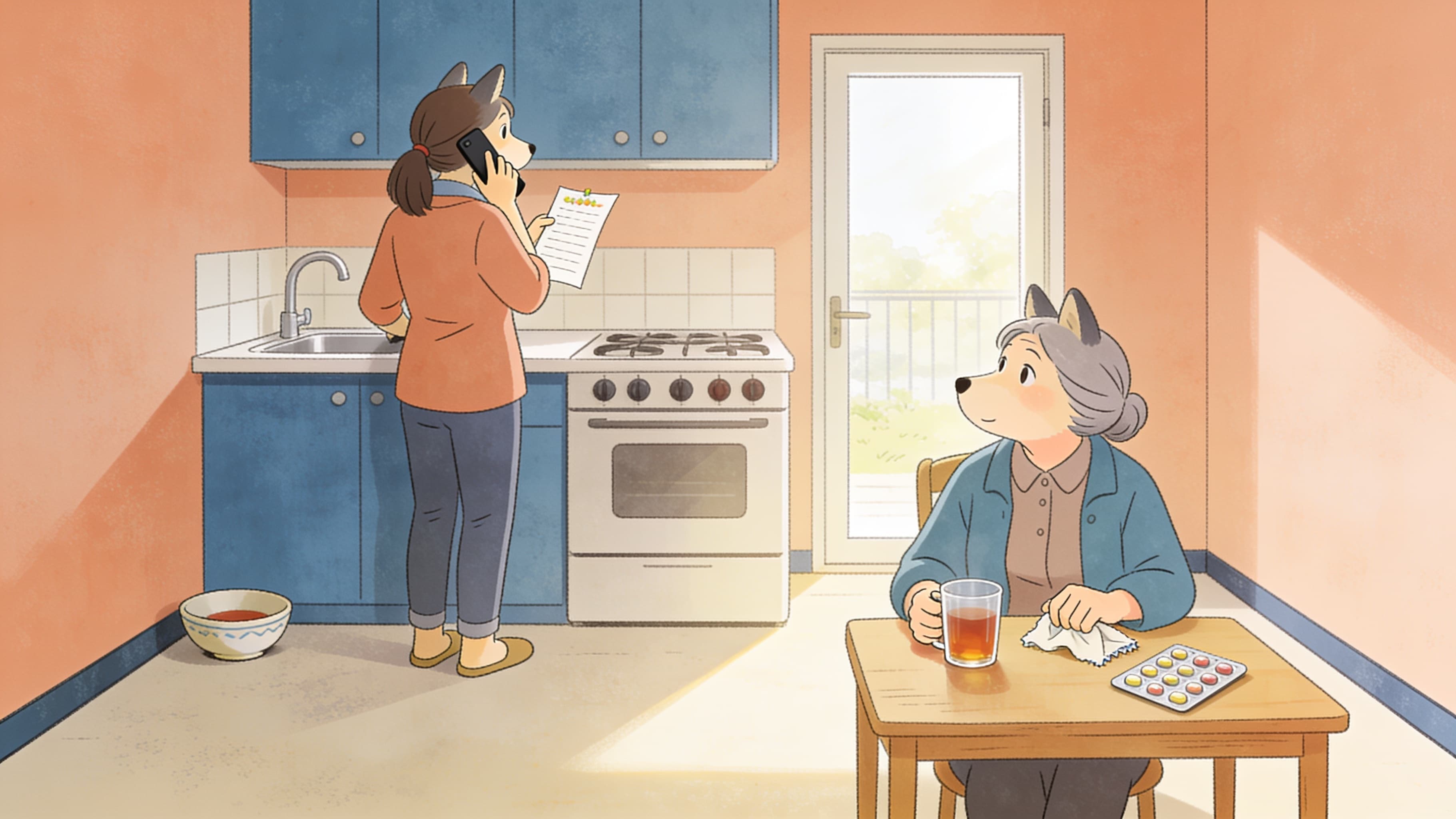
Dementia isn’t one day you notice and the next day you move Mom. It creeps. The stove gets left on once, then twice. Bills pile up unopened. She says she’s “fine” and looks fine when you visit—but you know the pill organizer is untouched. If you’re asking “Is my parent safe alone?” you’re already past the point where a simple yes or no works.
Start with a factual risk inventory, not an emotional gut check. Go room by room:
- Kitchen: Burn marks on counters? Stove knobs removed but she turns the gas on anyway? Expired food in the fridge?
- Bathroom: Soap scum and mold? Unused grab bars? Signs of falls—bruises she can’t explain?
- Bedroom: Unwashed laundry piled? Urine smell? Mattress protector missing?
- Outside: Unlocked doors? Mail overflowing? Car with new dents?
If any of these are present, safety is already compromised. The National Institute on Aging recommends a home safety assessment for anyone with memory loss (NIA Home Safety Checklist). You can also ask the local Area Agency on Aging (find yours at eldercare.acl.gov) for an in-home evaluation.
The Capacity Question: Who Decides?
You can’t just “take over” because you’re worried. Legally, your parent has the right to make bad decisions until a court says otherwise. The key concept is decisional capacity—the ability to understand information, weigh consequences, and communicate a choice capacity is task-specific and can fluctuate.
A geriatrician or neuropsychologist can perform a capacity evaluation. This is different from a dementia diagnosis; it specifically assesses whether she can manage her own finances, consent to medical care, or live safely alone. The Alzheimer’s Association offers a guide on capacity and decision-making (Alzheimer’s Association Legal Planning).
If she lacks capacity and there’s no durable power of attorney (POA) in place, you may need to pursue guardianship (also called conservatorship) through your county probate court. This is expensive and stressful—a last resort. Ideally, if your parent still has some lucid moments, try to get a POA and healthcare proxy signed before capacity is lost.
Legal Steps Without Burning Bridges
If your parent is still capable but resistant, try a family meeting with a neutral third party—a geriatric care manager or a social worker. The National Academy of Elder Law Attorneys (NAELA) can refer an elder law attorney to help structure the conversation around risk, not control (NAELA Find a Lawyer).
For those already past that point, here’s a rough roadmap:
- Get a capacity evaluation from a qualified professional.
- If POA exists, activate it (usually requires two physicians’ letters).
- If no POA, file for guardianship. The court appoints an attorney for your parent—prepare for delay.
- Simultaneously, apply for Medicaid for long-term care if assets are low. See our guide on Medicaid and Assisted Living in Illinois for a state-specific example (most states have similar waivers).
This article is general information and not legal advice. Consult a licensed attorney in your state.
Care Options: From Help at Home to Memory Care
Once you have legal authority (or cooperation), you need a plan. The least disruptive option is home care—a non-medical aide for a few hours a day or a live-in companion. The National Council on Aging has a home care checklist (NCOA Home Care Guide). Expected costs range from $150 to $300 per day for a full shift, depending on location.
If home care can’t manage safety—wandering, aggression, incontinence, falls—it’s time to consider a facility. Memory care (a specialized locked unit within or separate from assisted living) provides 24/7 supervision, structured activities, and staff trained in dementia care. For respite options, see our article on Understanding Respite Care.
Evaluating memory care is like reading a nursing home inspection report—you need data, not a pretty brochure. Demand the facility’s most recent state survey (often called a “statement of deficiencies”) and ask about antipsychotic medication rates, staff turnover, and dementia-specific training hours. Read our guide on Managing Sundowning in Memory Care for a deeper look at programming that actually works.
What to Look For—and Smell—on a Walkthrough
Visit at mealtime and at dusk (when sundowning peaks). Red flags:
- Smell: Strong urine or feces in hallways or resident rooms.
- Sound: Constant call bells unanswered for >5 minutes.
- Sight: Residents parked in wheelchairs in front of a TV, disengaged. No scheduled activities posted.
- Staffing: Ask how many CNAs are on duty per resident right now. The Alzheimer’s Association recommends at least one staff person for every 8–10 residents in memory care.
- Security: Exits alarmed? Wandering paths enclosed and accessible? Are there outdoor spaces that residents can use safely?
Green flags include staff who know residents by name, a visible activity calendar, and residents who look clean and well-groomed. If your parent has specific needs—say, LGBTQ+ identity—you’ll want to ask about inclusion policies upfront. Our guide on Finding LGBTQ+-Affirming Senior Care has more on that.
Wandering and the Hardest Decisions
Wandering is one of the most dangerous behaviors in dementia. It can happen suddenly, even in mild dementia. The National Institute on Aging notes that 6 in 10 people with dementia will wander at some point (NIA Wandering). If your parent has gotten lost or left the house at odd hours, in-home safety measures—door alarms, GPS trackers, locks above eye level—may no longer be enough. See When Dementia Leads to Wandering for specific prevention strategies.
At that point, memory care isn’t a nice-to-have; it’s an emergency waiting to happen. Making the move feels like a betrayal, but the alternative—a night with a police search, or worse—is worse.
The Emotional Weight
Families often feel they failed. They didn’t. Dementia is unrelenting. The best you can do is make fact-based decisions, involve your parent as much as they’re able, and lean on resources like the Alzheimer’s Association 24/7 Helpline (800-272-3900) and local support groups. You don’t have to get this perfect—just safe.
Sources & further reading
Related Articles
When Home Care Isn’t Enough: 7 Signs It’s Time for Assisted Living or Memory Care
A practical checklist of 7 signs that home care is no longer safe or sustainable, guiding families toward assisted living or memory care.
Memory Care in Oregon: Licensing, Costs, and What Families Should Look For in 2026
Oregon's memory care costs and regulations explained. How to verify dementia training, compare communities, and budget for 2026.
Private Pay vs. Government Assistance: How Senior Care Actually Gets Paid For
Home care, assisted living, and nursing homes are funded very differently. A plain-language map of private pay versus Medicare, Medicaid, and VA support, setting by setting.